
As many as 14 central government services have already been integrated with the e-biz portal.

Such a high level of WPI was last recorded in October 2012, when inflation was 7.4 per cent.

The war in Ukraine has made its presence felt at the World Economic Forum's annual meeting in Davos. As political and business leaders' debate, they remain fearful of Europe's economic future. There is a sense of gloom among many business leaders as energy shortage and economic recession rear their heads. Global investors are keenly assessing the presence of Indian delegation at Davos.

The wholesale price-based inflation eased for the eighth consecutive month to 4.73 per cent in January on easing prices of manufactured items, fuel and power. The wholesale price-index (WPI) based inflation rate was 4.95 per cent in December 2022 and 13.68 per cent in January 2022. Inflation in food articles, however, rose to 2.38 per cent in January, from (-) 1.25 per cent in December, 2022.

16 national and regional industry bodies and sectoral business lobbies video-conferenced with Commerce and Industry Minister Piyush Goyal on Saturday and raised key concerns facing Indian industry in the wake of the 21-day lockdown over coronavirus.

Last year in January at Amazon's flagship event Smbhav, Infosys Co-founder N R Narayana Murthy had to shorten his keynote speech from 20 minutes to about five because the event was delayed by 1.5 hours. "I will try to finish it in five minutes, because I am not used to delays," said Murthy, while addressing hundreds of micro, small and medium enterprises (MSMEs) about building businesses that last. In the audience was Amazon founder Jeff Bezos. Murthy referred to Bezos' prediction that the 21st century will be the Indian century. "That confidence enhances our enthusiasm," said Murthy. The relationship between Murthy and Bezos dates to 2014, when Prione, a 49:51 joint venture (JV) between Amazon and Murthy's venture capital company Catamaran, was formed.

The output of eight core sectors grew by 16.8 per cent in May, mainly due to a low base effect and uptick in production of natural gas, refinery products, steel, cement and electricity, official data released on Wednesday showed. The eight infrastructure sectors of coal, crude oil, natural gas, refinery products, fertilisers, steel, cement and electricity had contracted by 21.4 per cent in May 2020 due to the lockdown restrictions imposed to control the spread of the COVID-19 infections. In March this year, these key sectors had recorded a growth of 11.4 per cent, and 60.9 per cent in April.

The wholesale price-based inflation eased for the second consecutive month in January at 12.96 per cent, even though food prices hardened, the government said on Monday. WPI inflation has remained in double digits for the tenth consecutive month beginning April 2021. Inflation in December 2021 was 13.56 per cent, while in January 2021, it was 2.51 per cent.

On Friday, Putin formally announced the annexation of four regions -- Donetsk, Luhansk, Kherson and Zaporizhia -- and claimed that "this is the will of millions of people".
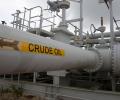
The wholesale price-based inflation rose to a four-month high of 14.55 per cent in March, mainly due to hardening of crude oil and commodity prices, even though vegetables witnessed easing of price pressures. As per the government data released on Monday, WPI inflation has remained in double digits for the 12th consecutive month beginning April 2021. The last time such a level of WPI was recorded was in November 2021, when inflation was 14.87 per cent.

Billionaire Mukesh Ambani's Reliance Retail on Thursday told the government that complex legal structures have been used by some firms to bypass the country's e-commerce rules which from the very beginning do not allow foreign capital in the inventory-based model. At a meeting called by the commerce ministry on allegations that foreign online retailers created complex structures to bypass foreign investment rules and damage small traders, Amazon urged the government not to issue any clarification until investigations into its business practices had been concluded, sources said. At the meeting, Reliance Retail's representatives said the Indian e-commerce policy does not allow foreign capital in the inventory-based model and foreign investment is allowed only in pure technical infrastructure/ platform that facilitates the meeting of buyer with sellers.
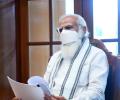
PM also said that states must act against any hoarding of oxygen and directed officials to ensure that the oxygen supply to various states happens in a smooth, unhindered manner and called for fixing responsibility with the local administration in cases of obstruction.

Drones are being sold by e-retailers like Flipkart and Snapdeal for less than Rs 40,000 apiece.

The Customs clearance required for moving equipment like laptops, desktops, etc out of SEZ units was delaying things as the clearance had to be taken in person after a first level of approval online.

The wholesale price-based inflation eased to a 29-month low of 1.34 per cent in March on easing prices of manufactured products and fuel items, even though food articles turned expensive.

"NSO is a private company, it is not a governmental project and therefore even if it is designated, it has nothing to do with the policies of the Israeli government," Israel's Foreign Minister, Yair Lapid, said at a joint press conference with Prime Minister Naftali Bennett and Finance Minister Avigdor Lieberman at the Prime Minister's Office on Saturday evening.

Falling private sector investment and farm distress are problems that call for immediate attention, says T N C Rajagopalan.

Foreign direct investments (FDI) into the country grew 19 per cent to $59.64 billion during 2020-21 on account of measures taken by the government on the fronts of policy reforms, investment facilitation and ease of doing business, the commerce and industry ministry said on Monday. Total FDI, including equity, re-invested earnings and capital, rose 10 per cent to the "highest ever" of $81.72 billion during 2020-21 as against $74.39 billion in 2019-20. "FDI equity inflow grew by 19 per cent in 2020-21 ($59.64 billion), compared to 2019-20 ($49.98 billion)," the ministry said in a statement. In terms of top investor countries, Singapore is at the top with 29 per cent share.

India Inc on Thursday pitched for continuation of reforms while ensuring tax and policy stability in the forthcoming Budget to prop up the economy hit hard by the COVID-19 pandemic. In the virtual pre-Budget consultation held with Finance Minister Nirmala Sitharaman, industry chambers said that government measures will help firmly entrench the nascent signs of recovery being currently seen in private investment. Capital expenditure by the government through enhanced infrastructure spending should in the meantime continue to support growth, CII president TV Narendran said.

Strengthening the portfolios of the home minister and the finance minister is a message that should not be missed, points out A K Bhattacharya.
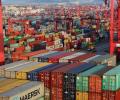
The country's exports jumped by 58.23 per cent to $34 billion in March as key sectors such as engineering, gems and jewellery and pharmaceuticals recorded healthy growth rate during the month, according to the Commerce Ministry's provisional data. Exports during April-March 2020-21, however, dipped by 7.4 per cent to $290.18 billion compared to $313.36 billion in 2019-20, the data showed. Imports during 2020-21 contracted by 18 per cent to $388.92 billion compared to $474.71 billion during 2019-20. In March 2020, the exports stood at $21.49 billion, which was a decline of about 34 per cent over March 2019 due to global slowdown induced by the Covid-19 crisis.

The wholesale price-based inflation eased to 10.66 per cent in September, helped by moderating food prices even as crude petroleum witnessed a spike. WPI inflation remained in double-digit for the sixth consecutive month. In August, it was 11.39 per cent. In September 2020, inflation was 1.32 per cent. "The high rate of inflation in September 2021 is primarily due to rise in prices of mineral oils, basic metals, non-food articles, food products, crude petroleum & natural gas, chemicals and chemical products etc. as compared the corresponding month of the previous year," the commerce and industry ministry said in a statement.
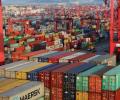
The country's exports rose by 47.34 per cent to $32.46 billion in June on account of healthy growth in sectors such as engineering, gems and jewellery and petroleum products, even as trade deficit aggregated at $9.4 billion during the month, according to the data released by the commerce ministry on Friday. Exports in June last year stood at $22 billion and $25 billion in June 2019. In May 2021, the outward shipment was worth $32.27 billion, while in April this year, it was $31 billion. Imports in June 2021 grew by 96.33 per cent to $41.86 billion, from $21.32 billion in June last year. In June 2019, imports stood at $41 billion.

The expansion was the first by Sarma since he assumed chief ministership of the state about 13 months ago.
Shipments from Russia rose nearly 33 per cent to $1.1 billion in March from $831.17 million in the previous month, which was when the country mounted aggression on Ukraine and faced sanctions from Western nations, the data accessed by Business Standard shows. Growth in imports was largely on account of oil, people aware of the matter said. The Department of Commerce is learnt to have written to the Ministry of Petroleum and Natural Gas (MoPNG), seeking details of imports, including the payment mechanism, which India has not made public.

'Nirmalaji's Budget announcements have long-term implications and are not backed by enough money when the short-term outlook looks bleak,' notes T N C Rajagopalan.

The wholesale price-based inflation rose to 2.03 per cent in January, 2021, even as food prices cooled. The WPI inflation was 1.22 per cent in December, 2020 and 3.52 per cent in January last year. While food articles saw softening in inflation in January, manufactured items witnessed hardening of prices, as per data released by the Commerce and Industry ministry.

India's medical devices imports surged 41 per cent to touch Rs 63,200 crore in 2021-22, led by a 48 per cent year-on-year (YoY) jump in imports from China to Rs 13,538 crore, the commerce ministry data analysed by the Association of Indian Medical Device Industry (AiMeD) has showed. Local industry players say this has led to several small and medium units to shut shop. Rakesh Vaid of Usha Fabs, a garments exporter, had started making N95 masks in his Gurgaon factory during the peak of the Covid-19 pandemic.
The wholesale price-based inflation surged to more than a decade high of 14.23 per cent in November, mainly due to hardening of prices of mineral oils, basic metals, crude petroleum and natural gas. WPI inflation has remained in double digits for eight consecutive months beginning April. Inflation in October this year was at 12.54 per cent, while in November 2020 it was at 2.29 per cent. "The high rate of inflation in November 2021, is primarily due to rise in prices of mineral oils, basic metals, crude petroleum & natural gas, chemicals and chemical products, food products etc as compared to the corresponding month of the previous year," the commerce and industry ministry said in a statement on Tuesday.

Gold imports, which have a bearing on the current account deficit, declined 47.42 per cent to $9.28 billion during April-October due to fall in demand in the wake of the COVID-19 pandemic, according to data from the commerce ministry. Imports of the yellow metal stood at $17.64 billion in the corresponding period of 2019-20. The imports, however, recorded a growth of about 36 per cent in October.

When asked about a social media campaign to boycott Indian products in the wake of the row, the minister said he has not heard of any such thing.

At the heart of the issue is the way e-commerce is defined in the current draft policy.

Worried over continuous decline in exports, the Commerce Ministry has stepped up its pressure on Finance Ministry to expeditiously notify a scheme which was announced in June to boost the overseas shipments.

The output of eight core sectors declined by 4.6 per cent in February, the steepest contraction in the last six months which experts said could drag the overall industrial production in the month into the negative territory. All the key segments, including coal, crude oil, natural gas, and refinery products, witnessed a decline in production, according to the official data released on Wednesday. The growth rate of the eight infrastructure sectors -- coal, crude oil, natural gas, refinery products, fertilisers, steel, cement and electricity -- stood at 6.4 per cent in February 2020. Last time in August 2020, the sectors had recorded a negative growth of 6.9 per cent.

MAG was constituted by Department of Electronics and IT in February 2014.
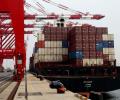
According to data released by the commerce and industry ministry, exports stood at $25.01 billion in the month. The fall is only the second time exports contracted in the past year.

Stressing that the Apna Dal-S stands for social justice, Union minister Anupriya Patel on Monday dissociated her party from "Hindutva and all those issues" and said it is ideologically different from the Bharatiya Janata Party.

Sources said the reshuffle will also aim at an image makeover for the party hit by school jobs scam probe.

Acting Foreign Minister of Afghanistan, Amir Khan Muttaqi, on Wednesday arrived in Islamabad, his first visit to the country, as part of efforts by the two sides to reset their ties in the wake of the Taliban's takeover of Kabul.

Gadkari said that the MSME sector contributes significantly in pushing the country's economic growth and creating employment.
